Skip to content
Powder & Crown Proch i Korona

Staff journal

Dispatches from the workshop

What is changing in the game, post by post: nations, art, sound and maps.

Latest post
Posts in the journal
14

I. Latest post

The Powder & Crown icon: a gold crown with a spark of powder bursting above its middle point, on a crimson field

Powder & Crown Proch i Korona

Maps Tech

From the PC workshop: battalions and cities to scale

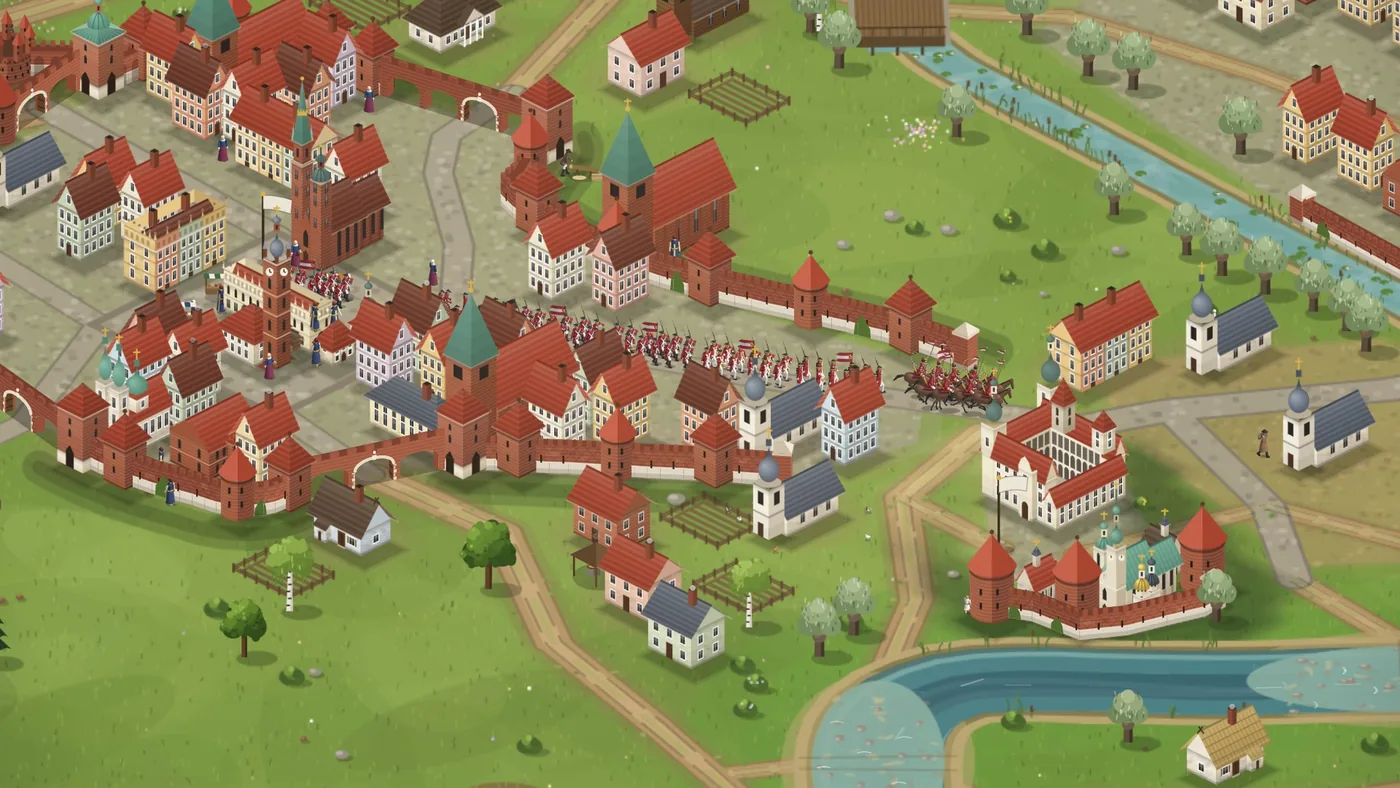
On PC and Mac the battle is growing. Squads become battalions and regiments, and on the big maps the cities stand at true scale: Warsaw is redrawn after the views of Bernardo Bellotto, and town houses and churches rise over the soldiers as they should. The unit icons are now small oil paintings, after portraits of the age.

Realistic mode no longer has an economy: you command an army of battalions of 240 men in three ranks, with a camp of the period behind it, platoon fire, weather and historical regiments to call in. On PC the game draws with the graphics card, and you can save a battle at any moment with F5 and load it with F9. All of this is work in progress for the Steam release in 2027.

More about the PC and Mac version
II. Archive

Earlier dispatches

Topics

  • All 14
  • Art 4
  • Sound 4
  • Nations 2
  • Maps 3
  • Tech 6
  • Light mode
    for 2 GB phones

    Tech

    Smoother on budget phones

    We tested the game on a range of real Android phones and made it lighter. Phones with 2 GB of memory now switch to light mode on their own: a slightly lower drawing resolution, no swaying trees or cloud shadows, fallen soldiers that fade sooner and lighter sound. You can turn it on or off in the graphics settings.

    Before
    30 fps
    a battle on a Xiaomi 14
    Now
    60 fps
    the same battle

    The game now counts the frames it really draws, so it no longer drops to every other frame without need. While a battle loads, the music fades out so it does not stutter, and the app is 55 MB smaller.

    Read the post [soon]
  • The Chronicle
    Music section

    Sound

    Music in the Chronicle

    The in-game Chronicle has a ninth section: Music. Its nine entries tell where each army’s music comes from and what plays in the menu, in battle, after a victory and after a defeat. Next to every piece there is a Listen button that plays it right there, in the Chronicle.

    The Chronicle now has more than 100 entries on troops, weapons, people, places and music, each with its sources.

    Read the post [soon]
  • Two players
    over the internet

    Tech

    Two players over the internet

    Until now, two-player mode needed both devices on one Wi-Fi network. Now the host can open a room on our game server and gets a short code; the guest types it in, and the game connects the two devices. If the connection drops, both come back to the same room and the battle carries on.

    Our server only introduces the devices: the battle itself runs directly between them. Playing over Wi-Fi with no server works as before. Online play is in testing, and on some mobile networks the devices may not connect yet. Two-player mode is part of the full game.

    Read the post [soon]
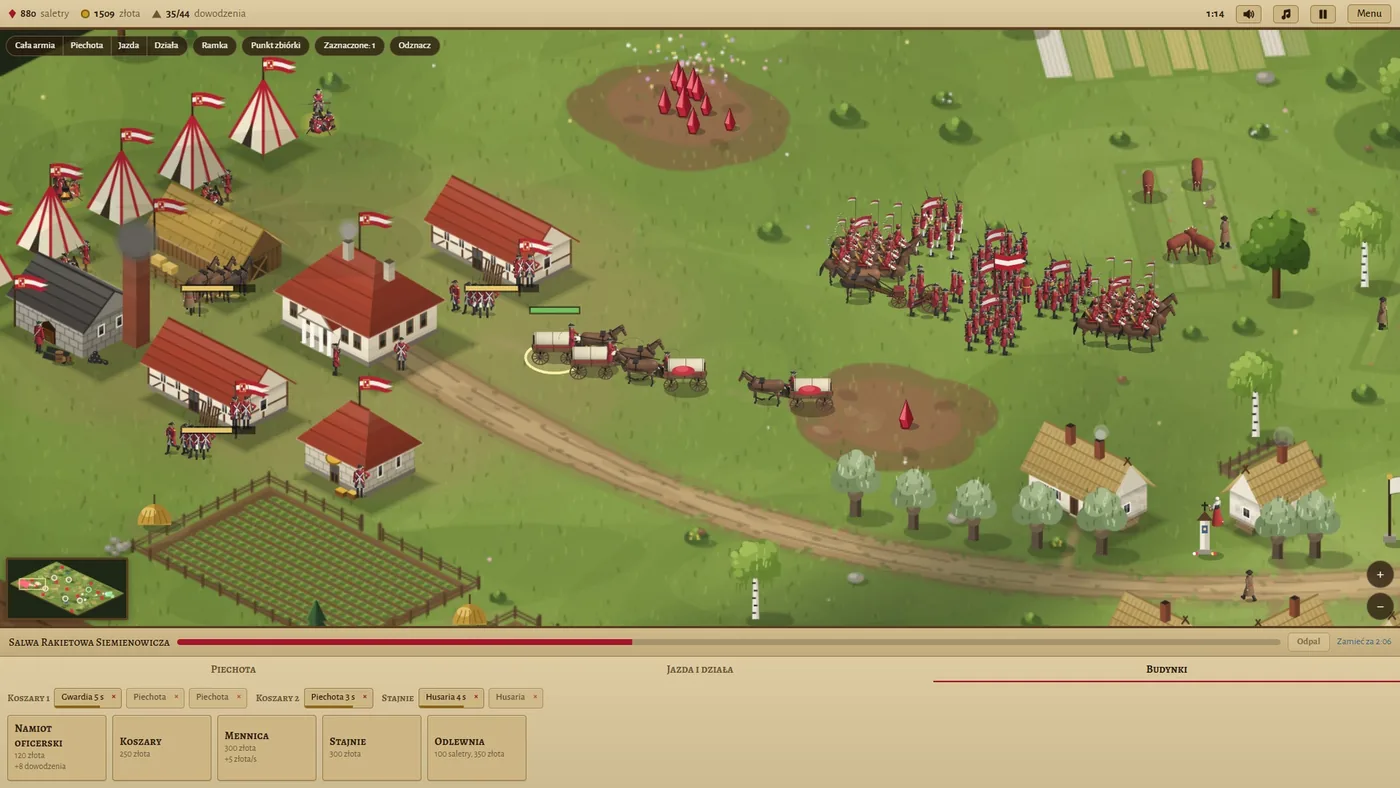
  • In-game screenshot with the interface: a Coalition camp with tents, barracks, stables and a mint, saltpetre wagons on the road and troops at the rally point, with the production queues and the minimap

    Screenshot from the demo · Polish interface

    Tech

    A demo to play in your browser

    You can now try the game right here on this site, with no account and no install. The demo has the tutorial and skirmishes between the Coalition and the Diktat on the plains of the Crown in summer, at three difficulty levels.

    It is the same game that is coming to phones, running in your browser on a computer or a phone (best held sideways). Your saved battle and settings stay in your browser. The other nations, the city maps, the campaign and two-player mode are in the full game.

    Play the demo in your browser
  • In-game screenshot: Kraków in summer, with brick walls and towers, town houses, oaks and birches, dirt roads with ruts and a river, and a column of Coalition infantry and hussars marching through the town

    Screenshot from the current version · Kraków, summer

    Art Maps

    New art for the land and its buildings

    We have redrawn the battlefield. Oak and birch crowns are now made of 100 to 150 small clusters of leaves lit from the upper left, and pines have tiers with ragged edges. Dirt roads have soft verges and wheel ruts, with grass between them on side roads and puddles in spring. Rivers and ponds lie lower than the meadow, with shaded banks and sandbars on the bends, and woods have fallen logs, stumps and anthills.

    Buildings
    Porches and shop signs
    Cottage walls are about a third taller, many houses have a porch or a lean-to, and roofs show their thatch, tiles or shingles. The tenements of Warsaw have cornices, portals and shop fronts.
    Battle damage
    Holes and rubble
    Round shot punches holes in walls and roofs, knocks cottages down, snaps trees and breaks fences. Haystacks and dry fields burn.

    Like the battle aftermath (dropped muskets, planted banners, wrecked guns), the damage is only for show: a ruined house still gives the same cover. In two-player mode both devices show the same damage, and it comes back when you load a saved battle.

    Read the post [soon]
  • Powder & Crown
    Proch i Korona

    Art

    Karmazynowa Iskra is now Powder & Crown

    The game has a new name. In Polish it is Proch i Korona; in every other language, Powder & Crown. Karmazynowa Iskra (Crimson Spark) was a working title and now survives only in the project’s internal names.

    The name came with a new icon: a gold crown with a spark of powder bursting above its middle point. It is the game’s name in a single sign. The Android splash screen is made from the same drawing.

    Read the post [soon]
  • Archduchy squad: grenadiers in white coats and bearskins, a Grenzer and a hussar
    Nations

    The sixth army: the Alpine Archduchy

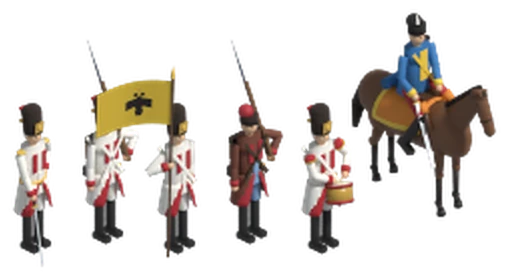
    An army modelled on Austria joins the game. Its artillery is 20% cheaper, its Grenzers take cover in woods as they would in a settlement, and its hussars plunder baggage trains and camps. On the other hand, the Hofkriegsrat in Vienna slows everything down: infantry, cavalry and artillery take 25% longer to train.

    Superweapon
    Hadik’s Raid
    Enemy buildings in the target circle pay a ransom and train no troops for 20 seconds.
    New opponent
    Magnate Familia
    Rebel magnates. You cannot command them, only fight them.
    Read the post [soon]
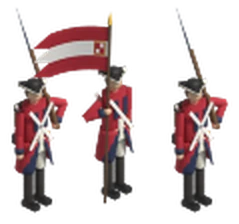
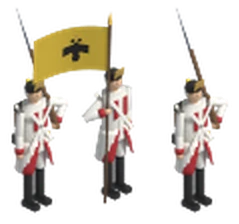
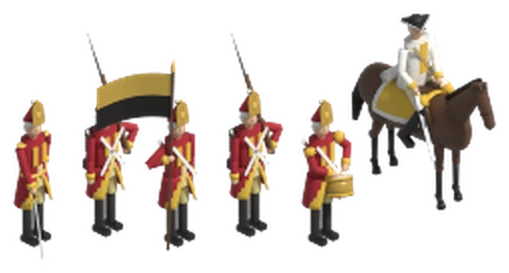
  • Coalition Crown infantry rendered in Blender Porte janissaries rendered in Blender Archduchy imperial infantry rendered in Blender
    Art Tech

    Every army in the new art style

    Every nation now has its Blender characters, the Magnate Familia included. The full set of atlases weighs 331 MB, so for phones the frames are scaled down, trimmed and tightly packed: 47 MB in all. A typical battle takes up about 38 MB of memory instead of 388 MB.

    PC
    331 MB
    full character atlases
    Phone
    47 MB
    the same characters, lossless WebP
    Read the post [soon]
  • Ogiński · Kozłowski · Telemann
    Haydn · Mozart · Handel

    Sound

    The Kościuszko Polonaise, a Te Deum and the Hallelujah

    Bach, Handel and Bortniansky are now joined by Ogiński, Kozłowski, Telemann, Haydn and Mozart. The Coalition gets the “Kościuszko Polonaise”, the Protectorate the “Hohenfriedberger-Marsch”, and when about six units or more are in the fight, Handel’s “Dettingen Te Deum” strikes up. After a victory you may hear the “Hallelujah” from “Messiah”; after a defeat, funeral music by Mozart.

    The new pieces come from public-domain scores. The game’s synthesiser plays them, with no audio files.

    Read the post [soon]
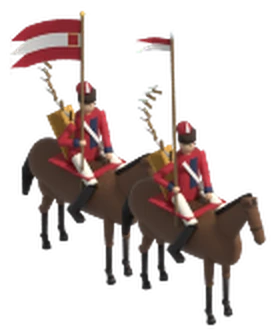
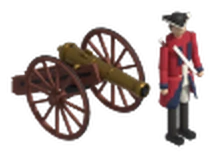
  • Crown infantry from Blender Winged hussar from Blender Crown artillery from Blender: a gun and its crew
    Art

    Characters from Blender

    We are starting a new art style. Until now the game’s code drew the soldiers, horses and guns; now they are characters rendered from 3D models in Blender, each in eight directions.

    Planned: portraits in the style of 18th-century engravings.

    Read the post [soon]
  • “And fight with what? My whip?”

    The powder wagon driver when you order him to attack (in the game he says it in Polish)
    Sound

    Unit voices in the languages of the age

    Units speak up when selected and confirm marches and attacks, and a new unit reports for duty from the barracks. Winged hussars and uhlans speak Polish, the infantry hear their words of command in German, the Diktat answers in Russian, and the Kalmyks just shout. The voices play together with drum and trumpet, because in the 18th century, orders really were given by drum.

    To start with: 287 lines for 29 characters.

    Read the post [soon]
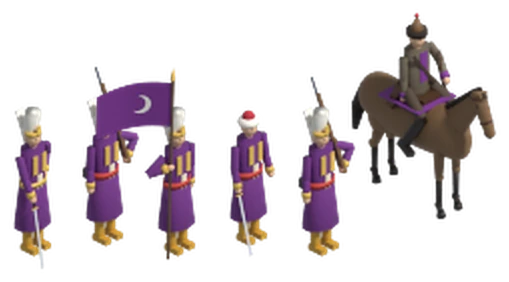
  • March squad: the Life Guards and a chevau-léger Porte squad: janissaries in purple dolamas, a standard-bearer with the crescent, a serdengeçti and a mounted Tatar
    Nations Sound

    The March and the Porte join the game

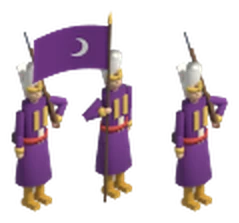
    The Meissen March has some of the finest artillery of the age and an empty treasury, and its superweapon, Loyal Deserters, brings up to two units of ordinary enemy infantry over to your side. The Crescent Porte fields janissaries, Crimean Tatars and the giant balyemez, and its superweapon, the Khan’s Raiders, throws three units of Tatars at the enemy.

    The Porte marches to “Ceng-i harbî”, a war song of the mehter. It was written down around 1650 by Ali Ufkî, born Wojciech Bobowski in Lwów.

    Read the post [soon]
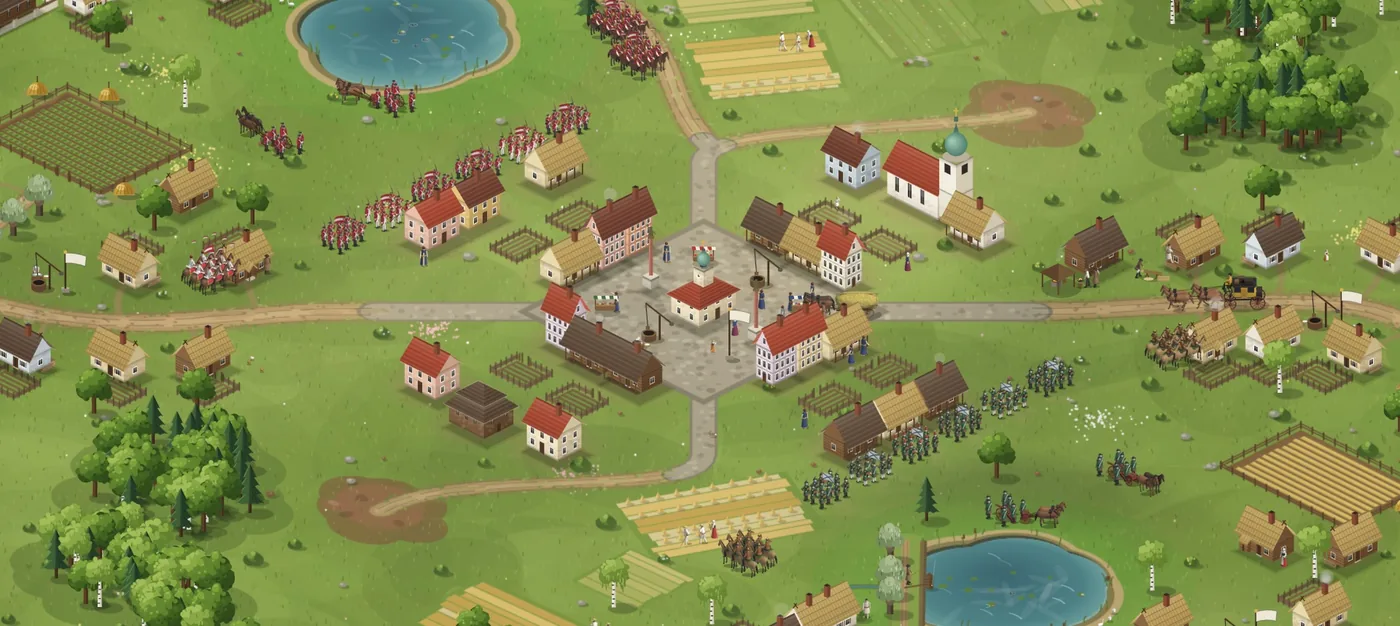
  • In-game screenshot: the map from above, with a town around a market square and town hall, villages, fields, ponds and forest

    Screenshot from the current version · Crown, summer

    Maps Tech

    The first version in the repository

    The single-HTML-file prototype has been split into modules, alongside an Android project and historical documentation. Every map is generated from a seed and is symmetrical, and the season (summer, autumn or winter) changes how it looks. Villages and towns give gold to whoever holds them, and two-player mode links two devices on one Wi-Fi network, with no server.

    Three armies to start with: the Coalition, the Diktat and the Prussian Drill, which a day later took the name Brandenburg Protectorate.

    Read the post [soon]

III. Free demo

See it in the field

The demo runs in your browser, on a computer or a phone: the tutorial and skirmishes between the Coalition and the Diktat, at three difficulty levels. The new trees, roads and cottages described above are already in it.

Play the demo

Free, with no account and no ads. Your saved battle and settings stay in your browser.